23 giugno 2022

K.G.F - CHAPTER 1/CHAPTER 2


Non vedevo l'ora di scrivere questa recensione e condividere con voi il mio entusiasmo per il secondo tempo di K.G.F - Chapter 1. La saga di K.G.F nel suo complesso è molto formulaica, e, in cinque ore abbondanti suddivise in due capitoli (K.G.F - Chapter 1, distribuito nel 2018, e K.G.F - Chapter 2), snocciola tutti gli stereotipi tradizionali. Ma il secondo tempo di KGF1 è il gioiellino che non ti aspetti. Ti colpisce dritto in fronte con un mattone. Al netto di qualche dettaglio lacrimoso, è un esempio di grande (grandioso) cinema. Miracolosa, perfetta combinazione di una regia mostruosamente ispirata e visionaria, e di un comparto tecnico mostruosamente abile. Fotografia feroce, espressionista, che scava solchi nei volti e nei luoghi. Scenografia metafisica, che sguscia siti originali e set artificiali per trasfigurarli in un inferno sinistro. Colonna sonora imponente, dal battito inestinguibile, a commento di sequenze aspre e toccanti. L'interpretazione di Yash, l'attore principale, altrove monodimensionale, qui regala una sfumatura di partecipazione emotiva. 
Il risultato è potente. Ti si incolla agli occhi e al cuore. Il secondo tempo di KGF1 è l'efficace rappresentazione di uno sfruttamento spietato, di un'umanità schiavizzata e spersonalizzata (ricorda la società descritta nel romanzo Fuga nel futuro dei fratelli Strugackij). E, insieme alla trama che si sviluppa in KGF2, è la rappresentazione - forse involontaria - di una rivoluzione tradita: una massa assuefatta all'asservimento, tristemente, sceglie sempre e comunque la sottomissione ad un nuovo padrone (accolto addirittura come un messia), perché ha dimenticato cosa sia la libertà. Il secondo tempo di KGF1 è coinvolgente anche negli aspetti tipici del cinema popolare indiano - vedi ad esempio le brillanti scene d'azione -, ed è un peccato che sia preceduto da un torturante primo tempo. Vi consiglio di programmare la visione di KGF1 in due parti, e di godervi il secondo tempo da solo.

A parte l'indiscutibile talento visionario del regista - concentrato in dosi letali nel secondo tempo di KGF1, più diluito nel resto della saga (il contesto del giacimento aurifero è inedito, ed è stupefacente come il sito venga idealizzato e sublimato) -, l'altra particolarità di K.G.F risiede nella complessa modalità di narrazione. Uno straordinario lavoro di cesello, coadiuvato dalla pazienza votata al martirio del direttore del montaggio. Immaginate Prashanth Neel, regista e sceneggiatore, sforbiciare i copioni e ridurli in mille frammenti, e poi ricomporre la sceneggiatura intrecciando questi frammenti fra loro senza rispettare cronologia, geografia o ruoli. L'esito non è sempre ottimale, risulta un po' faticoso seguire la trama. Il rischio è di perdersi nei continui rimandi, nelle continue sovrapposizioni. I personaggi minori sono numerosi, dalla funzione non sempre (e non subito) chiara. La storia, semplice nel soggetto, dopo il trattamento diviene macchinosa. I due film guadagnano in ritmo e perdono in lucidità. Ma non si può non riconoscere l'audacia e l'impegno profuso. Non ricordo di aver visto nulla del genere, sino ad ora, nel cinema indiano, perlomeno non con la stessa convinzione. Quanto al cinema internazionale, mi viene in mente il regista Nicolas Roeg. 

La produzione non ha badato a spese, e K.G.F ha il merito di aver prepotentemente imposto l'industria cinematografica in lingua kannada all'attenzione nazionale. La saga possiede una forza primigenia che cattura, purtroppo però dove il contenuto si assottiglia l'incantesimo svanisce. K.G.F racconta l'ascesa e la caduta di Rocky, un pericoloso criminale. La ricetta è sempre uguale: eroe (negativo) invincibile e stiloso di umili origini che considera il crimine unico mezzo di riscatto personale e sociale, eroina mortificante, figura materna stucchevole, antagonista malvagio, machismo esasperato, consueti stratagemmi formali per celebrare il protagonista, sangue a fiumi, eccetera. Le sequenze d'azione sono numerose, alcune ideate e realizzate in modo geniale. Yash è carismatico e svolge con diligenza il compito assegnatogli - galvanizzare il pubblico maschile, affascinare quello femminile. I dialoghi si sforzano di sprigionare scintille, ma la costante glorificazione di Rocky alla lunga stanca. Escludendo il secondo tempo di KGF1, si ha spesso l'impressione che la trama venga condotta dalla declamazione di battute solenni - non conversazioni -, e dalle scene d'azione, piuttosto che dalla sceneggiatura. 

KGF2 è spettacolare nella forma, inconsistente nella sostanza. L'unico tema narrativo interessante è  l'avidità, appena accennato dalla sceneggiatura. La storia viene innaturalmente allungata con incomprensibili, misericordiose strategie adottate sia da Rocky che dal rivale Adheera. Sanjay Dutt è credibile, malgrado Adheera sia indebolito da una scrittura superficiale: velleità vichinghe (!), proprietà ignifughe (!), l'improbabile sequenza del ponte. Il secondo tempo si lascia guardare con un certo divertimento, però di KGF2 mi è rimasto poco. La trama di K.G.F non richiedeva due pellicole. Si poteva comprimere il primo tempo di KGF1, e tagliare senza pietà le ripetizioni e le scene superflue in KGF2. Non sarebbe nata una saga di successo, solo un unico capitolo compatto e appassionante, di qualità superiore. Temo che i fan di Yash, però, non avrebbero gradito la parsimonia.

Negli ultimi anni, le industrie cinematografiche popolari non hindi - in particolare quella in lingua telugu - stanno tentando di creare un genere nuovo, una sorta di epica moderna molto più estremizzata nella scala e nella forma rispetto al consueto masala, ai film arrabbiati degli anni settanta del secolo scorso o alle più recenti pellicole di propaganda nazionalista. In un certo senso è la risposta indiana ai supereroi hollywoodiani, ma i protagonisti, pur invincibili e dalla forza sovrumana, non sono dotati di superpoteri. Caratteristiche comuni: machismo, personaggi ieratici e rigidamente classificati, battute altisonanti, eccezionali sequenze d'azione. 
A memoria, direi che S.S. Rajamouli ha aperto le danze nel 2015 con Baahubali, maestoso film telugu in costume che esonda nel fantasy, a cui è seguito nel 2017 Baahubali 2. È poi la volta della saga di K.G.F (2018/2022), inframmezzata nel 2021 dal primo capitolo di Pushpa (telugu). A differenza di Baahubali, K.G.F e Pushpa sono ambientati nella seconda metà del novecento, gli eroi sono poco immacolati e di umili origini, lo scenario è di tipo industriale, ed è il lavoro manuale a venir esaltato, non le gesta guerriere. 
La cinematografia popolare realizzata a Mumbai per ora rimane a guardare, relegata in un angolo dalle versioni hindi dei titoli sopramenzionati. Il progressismo nei contenuti e nella forma, avviato nella seconda metà degli anni duemila, da qualche tempo viene mortificato dalla moda nazionalista imperante. È probabile l'adesione al genere epico contemporaneo inaugurato da Baahubali, e Bollywood potrebbe alleggerirne gli estremismi, oltre a ristabilire i bilanci della case di produzione. Staremo a vedere.

TRAMA

La storia è ambientata negli anni settanta-ottanta del secolo scorso, con flashback negli anni cinquanta e sessanta. Rocky perde la madre da ragazzino, ed è determinato ad arricchirsi a qualunque costo. Si trasferisce a Mumbai e si affilia ad un'organizzazione criminale che lo incarica di assassinare l'erede di un impero economico. È l'occasione per - diciamo - un salto di qualità. Rocky raggiunge l'area denominata K.G.F., un sito minerario aurifero gestito con metodi illegali. Rocky si mescola all'umanità sconfitta che lo popola. Ventimila schiavi rapiti e tenuti prigionieri, congelati in una disperazione infinita. Le miserie di K.G.F. si intrecciano alla storia personale di Rocky, che viene accolto come un messia, un semidio figlio di una profezia consolatoria. Ma Rocky è pur sempre un genio del male. 

ASSOLUTAMENTE DA NON PERDERE

* KGF1: il rocambolesco arrivo di Rocky nell'area K.G.F, il combattimento nel sottosuolo che accende la miccia della rivoluzione, la processione religiosa e il rito sacrificale, i titoli di coda (ottima base per un graphic novel).
* KGF2: l'ingresso in scena di Rocky, la febbrile sparatoria con i kalashnikov, la distruzione della stazione di polizia (anche se inutile), il titanico scontro finale. 

ASSOLUTAMENTE DA DIMENTICARE

* La battuta dell'intrattenimento, davvero infelice.

RECENSIONI

* KGF1

Deccan Herald: ****
'For KGF’s team, cinema is bigger than anything else and the grandeur lies in telling a fantastically gripping story. Apart from the initial portions, which seem rushed, editor Srikanth cuts the scenes brilliantly. For a movie of an epic stature, this kind of editing works well. And we keep getting brilliant sets. Art director Shivakumar recreates the charm of old Bombay, the feel of old Bangalore and gets the raw backdrop of KGF to near-perfection. There is too much happening in KGF yet you don't lose focus thanks to Prashanth's approach. (...) He designs spectacular hero introduction and elevation scenes, riveting sequences and constructs characters which you root for. (...) With KGF, Yash makes a big statement. (...) He sinks his teeth into the angry-young-man-idea of Indian cinema and comes out victorious. Not many can deliver dialogue with so much swag as he does. (...) KGF could have skipped an action sequence. In fact, most of the action sequences are a bit jarring. The item song featuring Tamannaah Bhatia and the love track are ridiculously boring. But these are minor flaws. (...) Finally, Sandalwood [cinema popolare kannada] has its own story of splendour'. 
Vivek M.V., 21.12.18

The Hindu:
'Ambitious aspiration, humongous scope and big ticket budgeting - K.G.F Chapter I has it all. Actor Yash has sought to shed his romantic hero image for a heavy-duty action hero avatar. However, all the pluses do not translate to an enjoyable experience. Director Prashanth Neel’s hope of pouring money on the screen in the hope of things falling in place is exceedingly optimistic. Neel loses the plot as he focuses on image building rather than coming up with a credible tale. (...) Despite taking one back to the 70s and 80s when smuggling was almost a rite of passage for the good life, with well-designed sets and black-and-white photography, the film fails to live up to expectations. Film makers need to understand that wielding machete and thundering dialogues do not make a powerful film. Yash goes about his task like a zombie, never rising above the poor script. The film’s format of a writer telling Rocky’s story to the editor of a TV channel is unconvincing. By using a non-linear structure Neel has provided a different feel and texture to K.G.F Chapter I. There is a certain finesse to the edgy, moody cinematography (Bhuvan Gowda). Audience will be lost in the world of the gold fields of 70s. Neel proves again that he is master of craft. There are sequences where three scenes run simultaneously. The director has used VFX and the effort to go on location is evident. As far as the colour scheme is concerned, Neel and Gowda have used black and brown for a raw feel. The climax is spectacular with the support of brilliant cast. The sets and locations are spot on. Beyond that there is nothing in the film that we have not seen before. It lacks soul, a believable story and a rounded protagonist'.
Muralidhara Khajane, 21.12.18

* KGF2

The Hindu:
'Filmmaker Prashanth Neel corrects some of the wrongs of the first part in this sequel, which is electrifying for sure - but also a bit of a drag in the middle portion. There is something outlandish yet gorgeous about the K.G.F franchise that they no longer make such films. That they no longer imagine scenes propelled by absolute madness. After all, K.G.F films are written on steroids. There is a moment in K.G.F: Chapter 2, where Rocky Bhai (a rocking Yash, bathed and cleansed in masculine orgy) takes a machine gun out to blow up a police station. (...) In that one single shot, Prashanth Neel highlights what the K.G.F films are for: to create a delirious cinematic experience, where there is barely any time for us to contemplate logic and sense. There is only one way to look at K.G.F for it to work for you and that is to partake in the madness it offers - from scene to scene; one set piece to another; one giddy stunt choreography to the next. The most amazing achievement of Prashanth Neel has got to be the marrying of the Hollywood motifs from influential figures - Coppola, Scorsese, Mel Gibson to Peter Jackson and George Miller - with masala flourishes from Indian filmmakers. This meeting of the two worlds is powerful and visceral, even if it remains just a possibility throughout. (...) This is masala and it is pure. Come to think of it, the only emotional stake that is anchoring both the K.G.F films is the sufferings of Bhai’s mom, which again is a throwback to a popular trope from the masala universe of a previous era - but. There is something singularly distinct about Prashanth Neel’s idea of masala in comparison to S.S. Rajamouli’s, who, we must acknowledge, brought about a much-needed renaissance to the masala tradition of Indian cinema. Neel’s films are more focused on the extremes, while Rajamouli’s are a work of visionary. Speaking of tradition, it is truly a remarkable decision to cast Sanjay Dutt as Adheera. There could possibly be no other actor to have done justice to a film universe teething with masculine rage than Dutt, who used to be the poster boy of hyper-masculinity at one point. (...) When Yash and Dutt face-off, it does feel like the latter has passed on the hyper-masculine muscle man that he is known for, to the former. Which in itself could have been a befitting conclusion to celebrating the Angry Young Man heroes of a bygone era. (...) There is nothing new to the way things are dealt with in the second instalment, except the addition of three new villains. (...) All those things that were flat and derivative in K.G.F: Chapter 1 continue to be, in the sequel. This film too suffers from the leanness in writing, though the dialogues in Tamil (...) are terrific. (...) There are hardly any effective women in this festival of male toxicity. Of course, this is not a film for women. (...) Reena’s character comes across as so silly and dumb that she is an insult to all the one-note women characters in our masala cinema. Raveena Tandon as the Prime Minister (...) looks deadly; her character not so much. The familiar problems of the first part - the accelerated manner in which scenes are edited, near-deafening background score and the tiring back-and-forth narration (...) worshipping the hero - resurface in part two. You notice the weight of the narrative in the middle section as Prashanth Neel’s struggles with the political chapter of Rocky Bhai. All these make you feel if K.G.F: Chapter 1 felt more complete and wholesome. Another chapter? I’m out'. 
Srivatsan S., 14.04.22

Galatta:
'A film that works at two levels. One, we get a huge action spectacle with very inventive set pieces, superbly shot by Bhuvan Gowda in dark tones that indicate that we are watching a darker sequel. And two, we get a style-filled masala movie, filled with whistle-worthy dialogue and scene after scene with twists and surprises for the audience. (...) Every bit of this film is epic: Yash is epic and wonderfully larger-than-life, the dialogues are epic, Ravi Basrur's score is epic, and the action is epic. (...) The visuals come at us very fast, but this is not just the usual quick cutting for an attention-deficit audience. This is carefully planned stylisation. (...) The one thing that I wished was we had more of an emotional connect with the characters. But I didn't mind. The action and the masala flavour and the precision of the cuts are fantastic, and even if the story arc feels familiar, the denseness from the screenplay/editing makes it all seem new. Chapter Two improves on its predecessor: it is an epic times two'.
Baradwaj Rangan

Cinema Hindi: ***, ma il secondo tempo di KGF1 merita ****
Punto di forza: la visionarietà, l'audacia nella narrazione (anche se faticosa), fotografia, scenografia, colonna sonora, sequenze d'azione, il carisma di Yash.
Punto debole: i dialoghi, la narrazione faticosa (anche se audace), il primo noiosissimo tempo di KGF1, alcuni errori e troppi stereotipi nella sceneggiatura, il personaggio di Reena e la rappresentazione della sua relazione con Rocky.

SCHEDA DEL FILM

Cast:

* Yash - Rocky
* Srinidhi Shetty - Reena, compagna di Rocky
KGF1:
* Anant Nag - narratore 
* Tamannaah - item song Jokae (mal coreografata)
KGF2:
* Sanjay Dutt - Adheera, rivale di Rocky
* Raveena Tandon - primo ministro indiano 
* Prakash Raj - narratore  

Sceneggiatura e regia: Prashanth Neel
Dialoghi: M. Chandramouli, Prashanth Neel, Raaghav Vinay Shivagange (KGF1), Dr. Suri (KGF2) 
Colonna sonora: Ravi Basrur ****. Il compositore ha lavorato per più di tre anni alla realizzazione della colonna sonora - davvero notevole - di K.G.F, a cui hanno collaborato 400 musicisti provenienti da varie parti del mondo. Segnalo i brani, da KGF1, Dheera Dheera, Sidila Bharava, Salaam Rocky Bhai, Jokae (1970, di Upendra Kumar, rimaneggiato da Ravi Basrur); e, da KGF2, Sulthana, Toofan, Gagana Nee (dolcissimo).
Azione: AnbAriv (duo) ****
Scenografia: Shivakumar ****
Fotografia: Bhuvan Gowda ****
Montaggio: Srikanth Gowda KGF1/Ujwal Kulkarni KGF2 (applauso per il colossale lavoro)
Lingua: kannada
Traduzione del titolo: l'acronimo K.G.F. significa Kolar Gold Fields, un sito minerario nel Karnataka.
Anno: 2018/2022
Award: KGF1 si è aggiudicato, fra gli altri, i National Film Award per le migliori sequenze d'azione e per i migliori effetti speciali.
Trailer KGF1 e KGF2

RASSEGNA STAMPA

'Prashanth Neel’s vision is exactly what Kannada cinema needed to transcend regional and cultural barriers. It’s not everyday that you hear about a film, originally made in Kannada, get a simultaneous release in Hindi, Telugu, Tamil, and Malayalam. But then, KGF isn’t like most other Kannada films. (...)
The Genesis Of KGF (...)
The first meeting, where Prashanth narrated the story of KGF, was anything but smooth. “He’s so bad when it comes to narrating a story,” he [Yash] laughs, adding, (...) “It’s been more than four years since that meeting happened and he has improved a lot. But the moment he gets down to work, he’s a different person altogether. His clarity of thought and how he brings out the best in every actor and technician is exemplary. He’ll surely be one of the best directors in the country.”
Braving the sun and dust in Kolar
The principal shooting of KGF began in March, 2016. Long before that, the team decided to cast newcomers for key roles in the film, and all of them had to undergo acting workshops spanning nearly 12-15 months. A significant portion of the film was shot in Kolar, which was once home to India’s biggest gold fields. A dumping yard was turned into a huge set and at any given point, there were at least 500-800 junior artistes on the set, apart from the lead cast and crew. “Some people in the team had reservations about shooting there because the dust in the dumping yard had traces of cyanide, which is used to process gold. We took ample precautions, every member of the unit was insured. During the shoot, we made sure that everyone was hydrated, but shooting in the summer was really tough. We couldn’t shoot for more than 10-11 days at a stretch, and a lot of people fell ill because of the heat and dust. The junior artistes on the set used to hide their slippers beneath the sand; however, even their shoes used to get hot after every shot,” Yash reveals. If the weather conditions weren’t challenging enough, managing so many people everyday was tougher. Prior to the shoot, when there was a casting call for hundreds of junior artistes to be part of KGF, the response was phenomenal; however, two days later, several junior artistes did not show up given how challenging the shoot was. “Every evening, after the shoot, they had to hand over their costume and board a bus to the hotel room. When we realised that people were running away post the shoot, we hired a few bouncers to make sure no one left abruptly. Later, when the costume department realised they were falling short of clothes for junior artistes, we got to know that people were even running away from the set itself,” says Yash recounting the incidents during the shoot. “After a few days, we had no choice but to get junior artistes from Mysore. It might seem funny now, but the shoot was really grueling for all of us. The assistant directors did a phenomenal job training all the actors on the set, and some of them got so involved in their characters that they wouldn’t even return to their normal state during breaks.”
No industry is big or small
In a recent interview, cinematographer Bhuvan Gowda revealed that every shot of KGF was captured with a shoulder-held camera, which weighed nearly 40 kgs. “It helped us get a lot of hazy shots, which were required for the film. We tried to use natural lighting while shooting outdoors, and there’s even a shot where the only light source is the light from a match stick. Even the colour palette of the film is mostly red to signify blood, or ‘Japan Black’ which gave a greasy look and raw feel to the frame,” says Bhuvan Gowda. Yash is all praise for Bhuvan, art director Shivakumar, and music director Ravi Basrur. “There’s a lack of awareness about the kind of work being done in Kannada cinema, and I don’t like it when people discriminate against an industry. I’ve always believed that it’s the people who work in the industry who make it big or small. And when we do big films, then people’s perception too changes. I can proudly say that KGF has world-class technicians, and people will really appreciate Bhuvan, Shivakumar, and Ravi for their work. We wanted to do something which would make everyone notice our industry. Our vision was not to compete with other industries, but to create something which is world class in every sense, because like everyone else, we too use the same cameras, same editing software among other things,” Yash avers'. 

CURIOSITÀ

* L'acronimo K.G.F. sta per Kolar Gold Fields, sito minerario nel Karnataka. Le miniere, nazionalizzate dal governo indiano negli anni cinquanta, sono inattive dal 2001 per ragioni economiche, malgrado i giacimenti auriferi siano tuttora disponibili. I due capitoli di K.G.F sono stati parzialmente girati nella regione, costruendo (più volte) in loco giganteschi ed elaboratissimi set. Fra le altre location: Jayalakshmi Vilas Mansion (Mysore), Lalitha Mahal Palace (Mysore), Infosys Mysore Campus.
* La pre-produzione di KGF1 è durata circa un anno e mezzo, al fine di reperire e verificare ogni dettaglio per ricreare gli anni settanta nel modo più preciso possibile. Le prevendite dei biglietti ebbero un successo tale da indurre i distributori a fissare proiezioni alle 4.00 del mattino.
* KGF2 è, ad oggi, il film kannada più costoso (KGF1 è il terzo) e, nella classifica indiana degli incassi, occupa il terzo posto dopo Dangal e Baahubali 2 (telugu). Escludendo gli introiti dall'estero, sale in seconda posizione dopo Baahubali 2, e prima di RRR (telugu) e Dangal. Fonte Wikipedia. La versione doppiata in hindi di KGF1 diede del filo da torcere a Zero, distribuito lo stesso giorno (21 dicembre 2018).
* Durante le riprese di KGF2, purtroppo a Sanjay Dutt è stato diagnosticato un tumore. Ora l'attore sta bene.
* Riferimenti al cinema indiano: Amar (KGF1).
* Film che trattano lo stesso tema: Raees.

GOSSIP & VELENI

* In un film, innestare in modo coerente le coreografie e le scene d'azione è meno facile di quanto si creda. Spesso sembrano la ricreazione (le canzoni) e l'ora di ginnastica (i combattimenti). L'eroe di turno, invece di rompersi i coglioni in palestra, si mantiene in forma menando a destra e a sinistra. Poi capita come in K.G.F che alcune (non tutte) sequenze d'azione, già memorabili per concezione e realizzazione, siano incastonate ad arte nella sceneggiatura come pietre preziose in un collier. Lo spettatore avverte tutta l'urgenza, la necessità. In KGF1, quando Rocky combatte per l'affrancamento degli schiavi, risponde ad un mio bisogno primitivo. Avrei voluto lanciarmi nello schermo, con tutte le mie padelle, e dargli una mano.


16 giugno 2022

MISHAN IMPOSSIBLE


In India non si producono molte pellicole per ragazzi. Non mancano film per famiglie, il cui numero negli ultimi anni va però assottigliandosi, e non mancano film per un pubblico giovane. Saltuariamente viene distribuita qualche pellicola interessante - con un cast di attori preadolescenti - che, per temi e per contesto, in realtà si rivolge agli adulti. Rari i film di intrattenimento puro interpretati da e per giovanissimi. Mishan Impossible rientra in quest'ultima categoria.
Forse le pellicole per ragazzi dovrebbero essere giudicate dai ragazzi. Non rientrando nella fascia d'età a cui MI è destinato, provo una certa titubanza nell'esprimere un parere. Nel complesso MI non è da buttare. È una commedia d'azione a sprazzi divertente, con una sceneggiatura dignitosa anche se intermittente, con una trama che via via si complica inoltrandosi in terreni insidiosi, con dialoghi che oscillano dall'arguzia alla ripetitività, con una regia troppo sfilacciata che allenta le redini col procedere della narrazione, con un ritmo poco accattivante. I tre protagonisti sono uno spasso, bravi i giovanissimi attori, il soggetto è brillante, il primo tempo (al netto della discutibile sequenza iniziale) piuttosto godibile. 

TRAMA

Raghupathi, Raghava e Rajaram sognano in grande: Raghupathi adora Ram Gopal Varma (come biasimarlo) e vuole diventare regista, Raghava si impegna (a modo suo) nel cricket e si ritiene un talento naturale, mentre Rajaram aspira più modestamente a partecipare a Chi vuol essere milionario?. La scuola, lasciamola perdere. Invece: perché non catturare Dawood Ibrahim e intascare la lauta ricompensa? Parte la Mishan Impossible.

RECENSIONI

The Hindu:
'The endearing small-town milieu and sharp humour outweigh the loopholes in this crime comedy. (...) The witty lines keep coming one after the other and most of the gags seem believable in the context of the characters. (...) The film-centered humour is Mishan’s highlight. (...) The film is far from perfect but can leave you with a big smile'.
Sangeetha Devi Dundoo, 01.04.22

Film Companion:
'In Mishan Impossible, Swaroop RSJ, the director, seems to struggle with the comedic mind of Swaroop RSJ, the writer. (...) Swaroop RSJ is most comfortable in the scenes with the children in the first half of the film. He has fun with them and the three child actors are great with their lines. Rarely do we see child actors excel without hamming it. The dialogues, reaction shots, and music work in perfect harmony to give us a mix of laugh-out-loud moments and smile-at-a-bad-joke moments. It's never cringe and always in warmth. And it helps that the film is set in a village far off. We buy their innocence. (...) But it is the investigation and the message-y part of the film that the director is uncomfortable in staging'.
Mukesh Manjunath, 01.04.22

Cinema Hindi: ** 1/2
Punto di forza: soggetto, cast, parzialmente i dialoghi.
Punto debole: regia, ritmo.

SCHEDA DEL FILM

Cast:

* Harsh Roshan - Raghupathi
* Bhannu Prakshan - Raghava
* Jayateertha Molugu - Rajaram
* Taapsee Pannu - investigatrice
* Rishab Shetty - (buffo) cameo

Sceneggiatura e regia: Swaroop RSJ
Colonna sonora: Mark K. Robin
Lingua: telugu
Anno: 2022

CURIOSITÀ

* Nel 2014 i media indiani riportarono la notizia della fuga da casa di tre ragazzini di Patna, determinati a catturare Dawood Ibrahim per intascare la ricompensa.
* Riferimenti al cinema indiano: Enthiran, vari titoli di RGV, Puri Jagannadh, S.S. Rajamouli, Baahubali, RRR, Akshay Kumar, K.G.F, Rajinikanth.

14 giugno 2022

J E R S E Y


E così ho scoperto che i film a tema sportivo mi annoiano. Tanto quanto guardarlo, lo sport (farlo però mi annoia di più). Il finale è sempre lo stesso - e va bene: dopo tutto quel sudare, non vogliamo farlo vincere, il nostro eroe? Disgraziatamente anche la trama è sempre la stessa. La vita personale dei campioni dev'essere molto prevedibile, a giudicare dalla storie narrate al cinema. 
Jersey parla di cricket - sport dalle regole a me oscure -, in anni in cui l'Indian Premier League non esisteva e gli ingaggi dei professionisti non erano ancora stellari. La sceneggiatura, di qualità discreta, concede ampio spazio al rapporto padre-figlio, ma è la relazione giocatore-allenatore ad offrire spunti inediti. I dialoghi sono accettabili; alcune sequenze meritavano battute più articolate che avrebbero conferito uno spessore maggiore alla pellicola. I personaggi principali, scritti con ponderazione, sembrano poco naturali e si avverte lo sforzo profuso nel renderli reali - con l'eccezione dell'indovinatissima figura dell'allenatore. Shahid Kapoor non delude mai, le scene condivise con il padre Pankaj sono un regalo delizioso. L'interpretazione di Pankaj Kapur è correttamente sottotono.
In un aspetto però Jersey si distingue dai film a tema sportivo: la vena malinconica che aleggia lungo tutta la narrazione e che sostituisce la consueta esaltazione tipica del genere. Una nota di tristezza che caratterizza i personaggi (e le loro relazioni). Un'insoddisfazione cronica, un senso di sconfitta che li condanna ad un destino mesto, privo di ambizioni e di aspettative.  

TRAMA

Arjun è un giovane giocatore di cricket dal talento mostruoso. Sostenuto dall'incoraggiamento e dall'affetto del suo allenatore, aspira alla nazionale, ma viene scartato due volte. Arjun abbandona la carriera sportiva e si concentra sulla famiglia. Kittu, il suo adorabile bambino, desidera la maglia ufficiale della nazionale per il compleanno. Peccato sia troppo costosa.

RECENSIONI

Film Companion:
'The last five minutes of Jersey (...) are glorious to watch. They make us emotional, nostalgic even. But in the larger scheme of things, those five minutes - featuring a twist - are a patch-up job. (...) They lend the previous 169 minutes a deceptive sense of depth and emotional identity. Which is ironic, because those 169 minutes were in fact shaped by the right ideas. (...) Arjun is a genius with the bat, so the writing struggles to trust in his struggle. As a result, instead of committing to the difficult tale of a drifter with questions over his temperament, Jersey, with those last five minutes, provides answers that neutralize his journey in hindsight. (...) Arjun is so naturally morose and unlikable the film does not expect the viewers to buy his comeback. So those last five minutes are designed to humanize his journey. (...) Pankaj Kapur (...) has a limited role. But he so beautifully modulates his voice and body language across the three timelines between 1986 and 2021 - especially in those final shots - that it was hard not to imagine a better film about an assistant coach hoping to redeem himself through his maverick protege. (...) The narrative foundation is strong. Arjun's glory years are set in 1980s domestic cricket. His bleak years are set a decade later, in 1996, which is a useful era to set an emotion-driven cricket film in. For one, the financial pain is real. (...) A lot of Vidya's [moglie di Arjun] attitude towards Arjun feels too written. (...) Jersey has a few nice moments. (...) But these little details are the exception rather than the norm. I didn't quite buy Shahid Kapoor as Arjun. (...) He has the right lines and, at times, the brooding rage. But his roles as a father, a friend, a student and a husband are too clean-cut: compartmentalizing emotions is not the same as compartmentalizing a performance. I want to say the cricket is filmed and choreographed well. It is, to an extent. But with the second half (...) there is no human aspect to Arjun's batting - he barely sweats, (...) has no weaknesses, and wins matches for his team single-handedly. (...) His batting makes the sport look too easy... almost boring. (...) The robotic man-on-mission vibe wears off within a match or two. (...) Just as people expect more from their cricketers every subsequent year, audiences expect more from movies about cricket'.
Rahul Desai, 22.04.22

Cinema Hindi: ***
Punto di forza: la malinconia, l'impeccabile personaggio dell'allenatore.
Punto debole: la prevedibilità, la mancanza di misura nella rappresentazione del talento sportivo di Arjun.

SCHEDA DEL FILM

Cast:

* Shahid Kapoor - Arjun, giocatore di cricket
* Mrunal Thakur - Vidya, moglie di Arjun
* Pankaj Kapur - allenatore di Arjun
* Ronit Kamra - Kittu (bambino), figlio di Vidya e Arjun

Sceneggiatura e regia: Gowtam Tinnanuri
Colonna sonora: Sachet-Parampara. Commento musicale di Anirudh Ravichander.
Anno: 2022

CURIOSITÀ

* Jersey è il remake ufficiale hindi dell'omonima pellicola telugu del 2019 - vincitrice del National Award per il miglior film telugu -, scritta e diretta dallo stesso regista, interpretata da Nani.
* Riferimenti al cinema indiano: Rajesh Khanna, Anand.
* Film che trattano lo stesso tema: negli ultimi anni, il numero delle pellicole indiane a tema sportivo si è moltiplicato vertiginosamente. Le mie preferite rimangono Iqbal (cricket) e Chak De! India (hockey femminile). Fra le più recenti, Sarpatta Parambarai (boxe, tamil, 2021) è piuttosto interessante.


07 giugno 2022

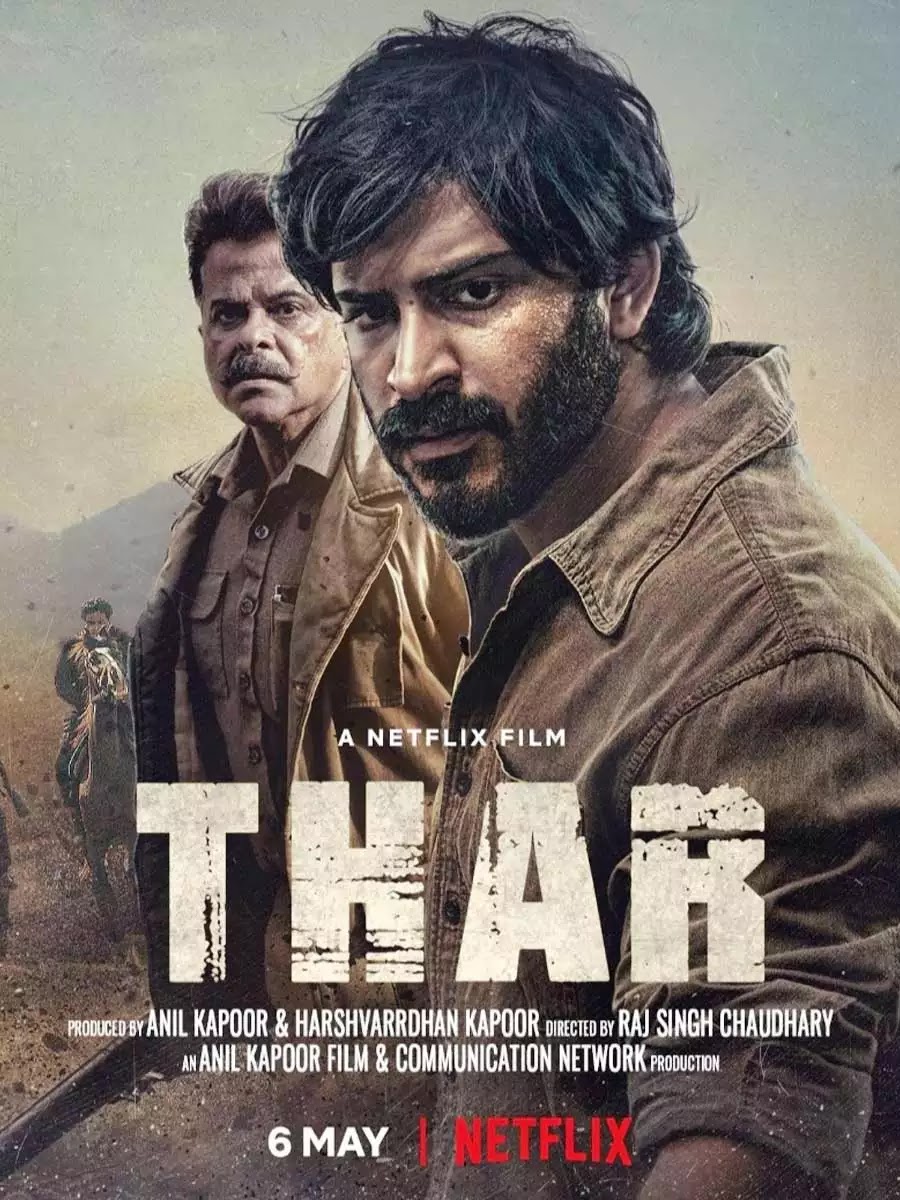
T H A R


Incrocio piuttosto riuscito fra un neo western immerso nello scenario mozzafiato del deserto del Thar (Rajasthan), e una storia personale di sangue e vendetta. Il risultato è un film cupo e violento. I personaggi sono privi di allegria, persino privi di vitalità. Si muovono stancamente con una determinazione meccanica - a tratti feroce -, in un vuoto emotivo che non risparmia nessuno. Il poliziotto, ligio e logoro eroe, non riconosce più il suo mondo e dubita di se stesso e delle scelte fatte; la brutalità dei delitti appare incomprensibile, gli argomenti della moglie lontani. L'enigmatico, silenzioso straniero ha lo sguardo pietrificato su un ricordo pesante come un macigno che gli preclude qualsiasi evoluzione. La donna, mortificata dai maltrattamenti, è una falena che insegue una luce condannata ad estinguersi. La sceneggiatura li accompagna e li sostiene nei loro inferni privati, con dialoghi essenziali e taglienti, con narrazioni diverse che si inseguono e si mescolano. L'atmosfera è fosca ma affascinante, e cattura più della trama. Il nemico è incerto e sempre in agguato, il contesto interessante (confini minacciosi, commerci proibiti, insidie mortali).

La regia è convinta, la fotografia magnifica (il panorama aiuta). Anil Kapoor regala una performance calibratissima - ed illumina comunque la scena. Harshvardhan Kapoor, sempre attento a non conquistare la simpatia dello spettatore (il personaggio e la sceneggiatura richiedevano neutralità assoluta), svolge efficacemente il compito assegnatogli - ed è comunque magnetico. Fatima Sana Shaikh ha un ruolo minore ma buca lo schermo con la perfezione nella gestualità, negli sguardi, nelle parole non dette. La colonna sonora si impone senza esitazioni, a tratti si amalgama con le immagini quasi per magia. 

TRAMA

In un sonnolento e assolato villaggio nel deserto del Thar, al confine con il Pakistan, un ragazzino trova il cadavere di un uomo impiccato e barbaramente torturato. Nel contempo, alla vigilia delle nozze una ragazza spia impietrita la fuga degli assassini dei suoi genitori. L'ispettore di polizia che indaga sugli omicidi segue la pista dei trafficanti di droga. Ma qualcosa non torna.

RECENSIONI

Film Companion:
'Thar is a strange beast. It's a difficult film to watch - almost tedious. (...) There's a lot going on; several little films jostle for space. Much of Thar looks disjointed. (...) But thinking about Thar is far more rewarding than watching it. Because on paper at least, it's a worthy experiment. Thar has an identity problem, but the collision of genres is also its conceit. On one hand, it's a period police procedural that gets hijacked by a cold-blooded revenge drama. (...) On the other hand, Thar is a standard small-town noir set in an unusual environment. (...) The revenge genre has undergone several iterations over the years, but it started out as a gun-toting Western. In arid deserts and one-horse towns. Siddharth is no cowboy; he is more like a modern revenge protagonist, urban and shadowy, confined by the roots of the genre. The disorienting aspect of the film is that it's hard to tell the world-building from the plot, the background from the foreground. The narrative subterfuge is awkward. The policeman is in his own movie until he's not. The newcomer is hiding behind that movie until he's not. The context is too elaborate to be cosmetic. (...) Like the film itself, it's a land bereft of identity - a gateway rather than an actual place. (...) In other words, the texture of the story - the cultural fabric, the red herrings - is more compelling than the story. The cinematography is striking: a wonderful example of how the climate on screen influences our thoughts. But it's also smart, because it forces us to reconsider our visual perception of both a revenge thriller and a bleak Western at once. The performances are fairly lived-in, too. (...) Harshvardhan Kapoor is appropriately haunted. (...) There's a thin line between emotional inertia and psychological numbness, which [Harshvardhan] Kapoor manages to walk. (...) Despite faltering at a macro level, some of the screenplay's micro details are nice'.
Rahul Desai, 06.05.22

Cinema Hindi: *** 1/2
Punto di forza: location, fotografia, atmosfera in generale, interpretazioni. La storia personale dello straniero viene raccontata tardi, quindi lo spettatore non è indotto a simpatizzare con lui - mi pare onesto.
Punto debole: il contesto meritava un approfondimento, ma forse sarebbe risultato un altro film. L'episodio del diario dimenticato è implausibile.

SCHEDA DEL FILM

Cast:

* Anil Kapoor - Surekha Singh, ispettore di polizia
* Harshvardhan Kapoor - Siddharth, antiquario
* Fatima Sana Shaikh - Chetna
* Satish Kaushik - Bhure, collega di Surekha

Regia: Raj Singh Chaudhary
Sceneggiatura: Raj Singh Chaudhary con la collaborazione di Yogesh Dabuwalla e Anthony Catino
Dialoghi: Anurag Kashyap
Colonna sonora: Shashwat Sachdev, Ajay Jayanthi. Purtroppo non ho trovato dettagli in rete. In modo grossolano: il brano che accompagna i titoli di testa (di Shashwat Sachdev) è di buona fattura, non male il breve brano in inglese. Il commento sonoro di Ajay Jayanthi ha una marcia in più.
Fotografia: Shreya Dev Dube con la collaborazione di Jay Oza e Swapnil S. Sonawane
Montaggio: Aarti Bajaj
Anno: 2022

CURIOSITÀ

* Riferimenti al cinema indiano: Sholay.

19 maggio 2022

SAANI KAAYIDHAM


Barbaro e spietato nel contenuto, affascinante nella forma, Saani Kaayidham è una stella cometa che illumina il vituperato sottogenere rape/revenge movie. Pur seguendone religiosamente la struttura, pur rischiando di sconfinare nello splatter e nel torture porn, SK colpisce per la decisa artisticità e per il valore delle interpretazioni. 
L'arte impregna inquietanti sequenze oniriche e inquadrature incastonate come quadri su una parete, inquadrature che restringono la realtà e catturano l'occhio. Frammenti in bianco e nero connotano lo struggimento del ricordo, la dolcezza ingannevole del miraggio. Le riprese in notturna sono magnetiche, lavano via la luce scabra del giorno, ammorbidiscono l'orrore.
Keerthy Suresh, totalmente conquistata dal suo personaggio, è eroica. Keerthy si produce in un ricco ventaglio di espressioni e trasformazioni. Dialoghi sussurrati e battute espulse come proiettili, sguardi acuminati, gesti che squarciano lo schermo e si incuneano nella carne. Mi ci vorrà del tempo per dimenticare la sua interpretazione. Considerando la natura cruenta del film, difficile che l'attrice si aggiudichi un National Award (e già m'indigno). Selvaraghavan è sgualcito e sottotono, spontaneo e credibile. Il suo Sangayya si confonde con lo scenario e sembra chieder scusa di esistere. È privo di compiacimento, imperturbabile, si comporta come chi ha un compito da assolvere, in assoluta, serena neutralità. Tutto il cast è di primissimo ordine.

SK è un angoscioso, brutale bagno di sangue. Gli effetti speciali non sono all'altezza della qualità tecnica della pellicola, ma per fortuna non la pregiudicano. La regia è originale, sofisticata, con i denti caparbiamente conficcati in ciascun fotogramma. La sceneggiatura, ben segmentata, di un femminismo implacabile, va oltre l'aspetto truculento ed esplora le feroci dinamiche che governano la discriminazione castale. I personaggi, disumani e crudeli, si muovono in un abisso tossico, maschilista. La forza femminile è dirompente, inesorabile, uno tsunami punitivo di sadico sterminio.   

TRAMA

Un uomo di bassa casta commette l'imperdonabile errore di occuparsi di politica. L'episodio innesca una catena di atrocità. Ponni, la moglie, agente di polizia, viene attirata con l'inganno, picchiata e ripetutamente stuprata. [Spoiler] L'uomo e la figlioletta vengono bruciati vivi. I colleghi di Ponni sono collusi. Fallita la giustizia, resta solo la vendetta. Con l'aiuto del fratellastro Sangayya, vittima di un crimine analogo, Ponni si vota al massacro con furia cieca. 

ASSOLUTAMENTE DA NON PERDERE

* Il breve, toccante monologo di Ponni nel secondo segmento (Ponni, the curse, and society). Ti strappa il cuore per ridurlo in poltiglia. Keerthy Suresh è immensa.
* Ma cos'è, nel finale, quel delizioso vecchio film di fantascienza, in bianco e nero, con tanto di tutine argentate e dischi volanti??

RECENSIONI

The Hindu:
'There is a rare pessimistic look that Arun Matheswaran brings about in his films through the use of monochrome visuals as a means to convey despair and suffering. Arun uses this black and white cinematography only at intervals, especially for the characters’ flashbacks. (...) The pessimism in Arun’s films comes from powerlessness. The monochrome, in other words, is intended to convey the stillness of the characters and the absence of colour in their lives. This, of course, can be attributed to the narrative choice with a very specific purpose: to tease us with a flashback. But the backstory never becomes the forefront, it is only a reminder. There are at least two absolutely stunning shots in the flashback that do remind you of Bergman - just in terms of its choreography. First is an extreme long shot of a deserted hut and a boy who looks deserted. Second, also an extreme long shot, of a (deserted?) mother and her daughter in focus, while the boy becomes a shadow figure in the background. (...) Cinematographer Yamini Yagnamurthy does a fantastic job; her work is very formal. She opens with a wide, a mid and a close-up shot. This sort of a composition is what you would find in classic films. Yamini is especially terrific when it comes to filming scenes of sexual violation, but more about that later. Arun Matheswaran is a fascinating talent, no doubt. He looks at cinema not just as a means of telling stories but epics. Hence, he is not satisfied with making films, but epics. (...) The politics in Saani Kaayidham is direct and closer to reality with caste-based violence. (...) If you take revenge as a genre, most filmmakers would look at it from the prism of cause and effect. And hence, they would be content with having three big moments in the narrative. Or maybe four. But in Arun’s films, these big moments are what they are about. These big moments aren’t exactly “big” in the conventional sense. (...) These are big in thoughts, choices and the scale with which frames are painted with blood. In other words, Arun Matheswaran’s films don’t build up to violence. They are designed to begin and end in violence, even at the conceptual level. This rare conviction that Arun possesses is what makes him a committed filmmaker. That commitment is even rarer to find these days, when films are increasingly becoming corporate-controlled and filmmakers needlessly pandering to the tastes of the market. Having said that, this writer definitely feels Arun needs to put the practice of his stylised violence to better use. He needs to direct his violence towards the audience and not be content with exploiting it for “shock” value. He needs to direct his violence towards making standout sequences. (...) The brutal sexual assault (...) is very, very disturbing and chilling. Yet, the sequence eschews the usual sensationalism. (...) Props to Arun and Yamini for filming the assault with minimum details. The sequence, yes, is cruel. But Arun is careful not to exploit the assault, unlike our commercial filmmakers. At the same time, Arun is equally careful when it comes to writing the bad guys. They are not bad because of what they do, but how they think. (...) But this is to not say that Saani Kaayidham is entirely brilliant. (...) Yes, violence is graphic, but it is not real. (...) This happens because violence is stylised. Sometimes the film does make you feel it was conceived for these “big” moments and not the other way round. (...) Keerthy Suresh’s eyes never looked more powerful. Selvaraghavan, on the other hand, is a great choice'.
Srivatsan S., 06.05.22

Galatta:
'Arun [Matheswaran] has a wonderful eye for composition, (...) he likes to hold his shots for a long time, without quick cuts, (...) he makes superb use of locations, (...) he loves frames within frames, and (...) he really gives super-precise instructions to the composer. Sam C.S.'s work is easily the highlight of the film. (...) These sounds do a lot to give the film the emotional undercurrents that are not there in the writing. (...) The main attraction of the film is the cast. Stripped of makeup, Keerthy Suresh dives into a difficult role. There are still some "mainstream" touches in her performance, but overall, she's quite effective. And Selvaraghavan is wonderful. He is almost like a child. He wears half-pants and seems more comfortable around children. But when hell breaks loose, he becomes a demon. The transition is remarkable. (...) Arun seems to be a better director than writer, and his characters feel one-dimensional. There are no shades. The arty black-and-white flashbacks (...) aren't enough. But a bigger problem (...) is the lack of a strong antagonist. (...) The killings happen almost too easily, and at no point do we feel the dangers in the path Keerthy Suresh and Selvaraghavan set out on. The mission feels like ticking items off a to-do list, and this lack of variation in scenarios becomes numbing after a point. The basic narrative about two people - the leads - coming together through a horrific set of crimes is certainly interesting. At first, they barely interact. By the end, they forge a bond. (Hence the more conventional, sentimental music.) Another interesting thread is that of the oppressed caste as all-out avengers. (...) But all of this would have come through better with stronger writing, both in terms of characters and situations. The film is filled with touches. (...) But what's missing is the primal emotion of rage. We don't feel what the characters feel. They stay at a distance, and so does the film'.
Baradwaj Rangan

Cinema Hindi: **** perché ci vuole audacia e visione tragica per affrontare un rape/revenge movie con tanta convinzione e senso artistico.
Punto di forza: la desolazione come forma d'arte, Keerthy Suresh (*****), Selvaraghavan (****), il cast, la regia, la fotografia in stato di grazia, i dialoghi affilati, il montaggio.
Punto debole: gli effetti speciali.

SCHEDA DEL FILM

Cast:

* Keerthy Suresh - Ponni
* Selvaraghavan - Sangayya

Sceneggiatura e regia: Arun Matheswaran
Colonna sonora: Sam C.S.
Fotografia: Yamini Yagnamurthy
Montaggio: Nagooran Ramachandran
Lingua: tamil
Traduzione del titolo: pulp paper, low-quality paper.
Anno: 2022

CURIOSITÀ

* SK fa parte di una trilogia sulla vendetta. Il primo capitolo, Rocky, distribuito il 23 dicembre 2021, è stato accolto con clamore dalla critica (trailer). Nulla è trapelato sul terzo capitolo. Il prossimo lavoro di Matheswaran è Captain Miller, un film d'azione ad alto budget ambientato negli anni trenta del secolo scorso, interpretato da Dhanush.
* Keerthy Suresh ha vinto il National Award come miglior attrice protagonista per Mahanati (telugu).
* Selvaraghavan è un regista. Nel 2022 debutta come attore in Beast, ma in un ruolo di supporto. Dhanush è suo fratello.
* Film che trattano lo stesso tema - rape/revenge: Bandit Queen, Maatr, Mom, Ajji, l'horror Bulbbul, 22 Female Kottayam (malayalam). Storie di vendetta al femminile: Kahaani, NH10, Gangs of Madras (tamil).

14 maggio 2022

V E Y I L


Un certo tipo di cinema in lingua malayalam ti colpisce dritto al cuore. Al di là delle eventuali lacune nella sceneggiatura, della prolissità nella narrazione, delle reiterazioni di soggetto o formula, ti colpisce comunque dritto al cuore. È un cinema emotivo, sorretto da interpretazioni interiorizzate e da registi appassionati. Non sempre esaltante, mai freddo. Racconta vicende personali, conflitti familiari, esperienze anche dolorose, dilemmi morali. I personaggi sembrano spenti perché taciturni e introversi, riflessivi, spesso tormentati.
Veyil rientra a pieno titolo nella categoria. Siddhu, un giovane fragile e rabbioso, cerca la sua strada e sfiora il crimine, oscilla fra un disperato desiderio di essere accettato e impeti irrazionali di aggressività. La sceneggiatura è fitta ma un po' confusa. Il perno narrativo è l'aggrovigliato rapporto madre-figlio, da cui si dipanano a ventaglio le altre sottotrame - interessante l'esito della storia d'amore. Veyil si sforza di mostrare tutti gli aspetti in gioco. Siddhu, infelice e prigioniero di se stesso, non è conficcato artificialmente in uno scenario: il suo passato, il suo bagaglio personale, le sue relazioni affettive e il suo quadro psicologico sono delineati con cura. È completo nelle sue insicurezze e nella sua traiettoria di evoluzioni e involuzioni. La sua formazione passa in secondo piano rispetto alla caratterizzazione del personaggio: chi era? chi è? come lo è diventato?
Il cast è ottimo, in particolare Shane Nigam, attore la cui sensibilità ben si addice al vulnerabile Siddhu. Sarath Menon, regista e sceneggiatore, è ispirato e complice. Pur con qualche esitazione e qualche incertezza di troppo nel ritmo, si percepisce l'impegno che ha profuso in questa sua comunque apprezzabile opera prima. 

TRAMA

Siddhu è uno studente ripetente e svogliato. La madre lo tratta con durezza e preferisce interagire con Karthi, il giudizioso figlio minore. Siddhu si addolcisce solo con Shruti, la ragazza che ama. A mano a mano che la trama si snoda, la storia e i personaggi si approfondiscono, e vengono al pettine molti nodi che indurranno Siddhu ad allontanarsi dal suo ambiente e a commettere errori. 

RECENSIONI

The Hindu:
'Certain elements of Veyil are well-executed, but a dullness creeps in in between. Veyil can be quite a strange title for a film when there is hardly a ray of light in the life of its protagonist. But then, it could also be a reference to the harsh rays that drain the life out of plants, leaving them dry, and the earth parched. (...) Sarath [Menon] uses the material in multiple ways, to look at the internal friction within the family, (...) and his slow descent into criminality. The latter is one of the things that the film gets right. Just like Siddharth [il protagonista], the audience too might find it hard to identify the exact point where he takes the turn to the dark side, although finding the reasons for the same can be easier. It also goes with the nature of the script, which is vague in parts, leaving quite a few things unsaid and labouring needlessly over the things that are somewhat clear. (...) The script, even while focussing on Siddharth, gives almost equal importance and character to those around. (...) One of the downers for the film is a certain dullness to the proceedings, which cannot be explained away just by the kind of theme it is dealing with. Ironically, some of the darkest events in the film, especially the key event involving Siddharth’s brother and a mentally challenged relative of theirs, appear as the brightest spots, due to their execution. Veyil has some well-written, well-executed passages, one cannot but wish for some level of trimming and a bit more of coherence'.
S.R. Praveen, 25.02.22

Film Companion:
'The film's dream-quality makes Veyil both a difficult and a special film to experience. (...) This style of writing adds a layer of melancholy and an honesty to the retelling of what's essentially a balance-sheet of good deeds versus regrets. (...) It essentially wants to be one thing - a story of brotherhood. (...) Veyil (...) develops into a tragic coming of age story where there are no miraculous escape from reality. (...) Veyil remains a poignant and painful journey about growing up and growing apart'.
Vishal Menon, 01.03.22

Cinema Hindi: *** 1/2
Punto di forza: sceneggiatura introspettiva e articolata, atmosfera intima, Shane Nigam e il resto del cast.
Punto debole: a tratti la lentezza. Avrei preferito una durata minore.

SCHEDA DEL FILM

Cast:

* Shane Nigam - Siddhu
* Saed Imran - Karthi, fratello di Siddhu
* Merin Jose Pottackal - Merin, amico di Siddhu     
* Sreerekha - madre di Siddhu e Karthi
* Sona Olickal - Shruti, fidanzata di Siddhu
* Shine Tom Chacko - Jomy, parente di Shruti

Sceneggiatura e regia: Sarath Menon, al suo debutto
Colonna sonora: Pradeep Kumar, Jango, Pranavam Sasi. Freschissimo il brano The Hey Song.
Fotografia: Shaz Mohammed
Montaggio: Praveen Prabhakar
Lingua: malayalam
Traduzione del titolo: sunlight
Anno: 2022

RASSEGNA STAMPA

* I am happy and satisfied with Shane Nigam's performance, Silpa Rajan, The Times of India, 13 luglio 2020:
'Films were always a fascinating experience for Sarath Menon, even during his Qatar days, where he was working as a sales manager. He was a member of the Doha Film Institute and a short film contest they conducted changed Menon’s life. He was so naive and hardly knew how to craft a script. But he put together what he knew and sent it to the contest. “Luckily my script was selected and they sent me to Uganda, at Mira Nair’s institute. I attended a workshop on screenwriting for a month and that’s how I started to take cinema seriously,” the debutant director said, describing his journey through the wonders of filmmaking. After arriving in Kerala, Sarath focused on his passion for movies and he has also been an assistant to Lijo Jose Pellissery in his movies ‘Angamaly Diaries’ and ‘Ee. Ma. Yau’. (...)
Speaking about the film, the filmmaker tells us that it is a family drama, which discusses a complex issue. “The movie takes the audience through two years in a person’s life. ‘Veyil’ talks about the politics of ‘point of view’ (perspectives). For instance, what I think is right, would be a much more personalized thought. What I believe is right might be wrong for someone else, and vice versa. We are trying to convey the same idea through the project. Shane Nigam is essaying the lead character Sidharth in the movie. The whole film travels through Shane’s character. For a person, his last year of academics and the coming year will be one of the crucial ones and the turning point of life. We will discuss this. Also, the movie will portray the bonds within a family, the relationship between siblings, the egos they have in between, and much more. ‘Veyil’ will also have some thrilling moments,” the director added explaining what the movie is about to offer. When asked about how was it directing Shane Nigam, one of the finest young talents in the industry, Sarath Menon said, “He has given his best. I am happy and satisfied with Shane Nigam’s performance.”

CURIOSITÀ

* Riferimenti al cinema indiano: Deepika Padukone, Om Shanti Om, Mohanlal, Suresh Gopi, Taapsee Pannu.
* Riferimenti all'Italia: un personaggio si chiama Stella.
* Film che trattano lo stesso tema: Kumbalangi Nights.


10 maggio 2022

NARADAN


L'intenzione è lodevolissima: Naradan mostra senza mezzi termini l'opportunismo criminale e la dubbia professionalità di cui si macchia una certa frangia dell'informazione televisiva. In India, ci vuole coraggio a dirigere - e interpretare - un film come Naradan, infischiandosene del rischio di venire pubblicamente triturati da quei baroni dei media con la coda di paglia. 
Premesso ciò, Naradan non convince fino in fondo, soprattutto perché privo di una sceneggiatura coerente. La prima parte è una cronaca realistica della deprimente quotidianità di un gruppo di giornalisti. La seconda, più patinata, anticipata da un breve passaggio a dir poco paradossale, è il nocciolo della storia: l'ascesa di Chandraprakash, spregevole e amorale conduttore di programmi di informazione - qui Naradan sfodera l'artiglieria pesante, nessuna misericordia nei confronti del protagonista. A seguire una terza parte, non necessaria e con set inspiegabilmente spartani, nella quale la pellicola vira verso il genere giudiziario, con un finale consolatorio ma posticcio. 

Le tre parti sono slegate fra loro, mal combinate, la narrazione non è fluida, la regia manca di lucidità e di visione generale. Naradan non è una satira, e non è abbastanza incisivo per un tradizionale film di denuncia, sembra si collochi nel mezzo, ma questa incertezza ne mina la serietà. Naradan si limita ad illustrarci il ristretto ambiente dei media, tratteggia in modo superficiale la sfera interiore del protagonista, e trascura il contesto sociale e politico che favorisce il suo successo in termini di ascolti. L'involuzione di Chandraprakash risulta implausibile, le motivazioni deboli. 
Tovino Thomas è indaffarato nel dar vita alle diverse sfumature di Chandraprakash, con esiti non sempre precisi. In alcuni punti la sua interpretazione andava affilata. La sceneggiatura dispersiva non gli è stata d'aiuto. Anna Ben è un magnifico regalo offerto dall'industria in lingua malayalam al cinema indiano, un'adorabile giovane attrice baciata da un talento fresco e spontaneo.

TRAMA

Chandraprakash è il fiore all'occhiello di News Malayalam, il più importante canale televisivo di informazione in Kerala. Ma il suo entusiasmo si sta appannando, e i canali concorrenti ne traggono vantaggio per rosicchiare ascolti. Durante un breve congedo, Chandraprakash viene inaspettatamente sostituito da un collega più giovane, e decide quindi di dimettersi. Una cordata di investitori intenzionati ad accaparrarsi una fetta dei sostanziosi introiti pubblicitari, coinvolge Chandraprakash nel progetto di una nuova rete. Nasce così Narada News. E nasce - rinasce - CP, versione aggiornata e priva di scrupoli di Chandraprakash.

RECENSIONI

The Hindu:
'In Naradan, Aashiq Abu hardly ever employs satire. The script by Unni R. is as direct as it can get, drawing on recent happenings from the political and media landscape in the State as well as outside, to tell the compelling story of the rise of an unethical media anchor. (...) It is much to Tovino Thomas’s credit that he is ready to take up characters that are not likeable. (...) Chandraprakash is even repulsive at many points. His hectoring style of anchoring, cutting off panelists midway and misinterpreting their words to serve his purpose, is reminiscent of many contemporary anchors. It is the transformation in Chandraprakash’s character which becomes one of the high points of the film. (...) Aashiq Abu uses Naradan to invert the power equations of the newsroom studio, to put on trial the style of journalism promoted by sections of the visual media in recent years. The script points at the inherent voyeurism, the moral judgements and the conservative mindsets of the self-anointed judges in newsrooms. Though many of the scenes are set around tiring news debates and voyeuristic reporting, it makes for engaging drama in the film. Some parts, especially that of a rapper confronting the anchor in a live video, seems to have been drawn from happenings in the national media, just like a part of the anchor’s character. A good part of the hour leading up to the climax has been structured as a court-room drama, with some solid performances from Indrans, as the judge who is not easily swayed, and from Anna Ben, as a lawyer. Although the arguments justifying media gags in some cases can be misused by some elements, as has happened in recent years, the court arguments also raise valid questions on what constitutes public interest journalism. The two rap songs add to the general idea and spirit of the film. Naradan is a stinging critique of the rot that has taken over at least a section of the visual media, which revolves almost completely around ratings'.
S.R. Praveen, 03.03.22

Film Companion:
'It reveals an unsanitized and unromantic look at a profession that was either portrayed as too glamorous or too caricaturish. (...) The effort here is to give us an authentic tour of the newsroom and what the pressures of TRPs [Television Rating Point] do to its foot soldiers. (...) Naradan oscillates between realism and satire. (...) Despite the relevance of the themes discussed here, (...) one can feel the cracks in the storyline. It's like the film we see is the result of an earlier draft without the necessary rewrites to make it cohere. (...) Even the consciously OTT performances of both Tovino [Thomas] and Sharaf [U Dheen] (...) does not fit with either the realistic or the satirical pitch. And that's what becomes even more confusing when it eventually abandons the newsroom for the courtroom. (...) Why do the courtroom scenes look and feel so basic? (...) With this confusion in tone and texture and with incomplete characters (...) Naradan is a bit all over the place even though one agrees and values everything it wants to say. (...) Naradan lacks the subtlety to work either as a complex drama about a man's descent into darkness specifically or to be an expose of the media business in general'.
Vishal Menon, 04.03.22

Cinema Hindi: ***
Punto di forza: il soggetto (****), le intenzioni, l'audacia.
Punto debole: sceneggiatura poco focalizzata, incompleta.

SCHEDA DEL FILM

Cast:

* Tovino Thomas - Chandraprakash, giornalista televisivo
* Sharaf U Dheen - Pradeep, giornalista televisivo
* Anna Ben - Shakira, avvocatessa
* Indrans - giudice

Regia: Aashiq Abu
Sceneggiatura: Unni R.
Colonna sonora: Sekhar Menon, Fejo, Manchild
Lingua: malayalam
Traduzione del titolo: Aashiq Abu spiega: 'There are layers to Naradan from the Puranas. Firstly that he was the first messenger and secondly he was some kind of a troublemaker who cooked something between the news he carried'.
Anno: 2022

RASSEGNA STAMPA

'The word Naradan is generally used for a mischief-maker. Is that the film all about?
Aashiq: There are layers to Naradan from the Puranas. Firstly that he was the first messenger and secondly he was some kind of a troublemaker who cooked something between the news he carried. Yes, some negative and some positive connotations are there for this Naradan.
Tovino: As Aashiq said when we hear the word Naradan we get two pictures, one of a troublemaker and one of a messenger who delivers news. Definitely a messenger, but one who doesn’t follow ethics, so yes a troublemaker!
Have you modelled yourself on any newsperson?
Tovino: The first thing we decided was not to take direct inspiration or imitate anyone because our character is fictional, our premise is fictional and the media channel we are showing in this movie is also fictional. We have taken references to be in that template so that when people watch him they feel that they are watching a newsreader. It’s a story and a fictional character but you can find relatable incidents. Besides talking about what’s happening behind the newsroom, the pressures a media person has and how they deal with competition from the other channels, there is a lot more in the film. (...)
Aashiq when you set out to write Naradan a story against a media backdrop and how people manage their TRPs and pump up the volume, was there anything else you wanted to say through this movie?
Aashiq: Initially I was just curious about the life of a television journalist who conducted a prime time debate and was actually a performer. I wanted to know after performing for one hour what his life was like when he got back home. I started getting curious about this character. I spoke to Unni who was one of the leading journalists when Kerala started the Malayalam news telecast. He had left his job and joined cinema. So I thought he was the man to know exactly what was happening behind the camera and in newsrooms. That was actually the trigger point. Then I started following the stories which were with Unni R. It was a very fast process to model this character Chandraprakash. (...)
Often an actor reveals his vulnerability to the director. Is it easier for you, Tovino, to reveal your vulnerability to Aashiq than to other directors?
Tovino: We have worked together and I know his working style so it's easy for me to reveal my vulnerability to him. Also, I am someone who is not ashamed that I am vulnerable. I am not perfect and I have a lot of imperfections I am working on. Initially, when one line of Naradan was narrated to me the concern I had was that being from Thrissur I speak very fast and so can omit a few words. But I could not take that liberty when I was doing this particular character. (...) My character in Naradan was that of a performer. I was concerned because I hadn’t done a character like that before and I knew I had to work a lot on my diction and other things. But when I mentioned it to Aashiq sir, he told me not to worry. From then on him and his writer Udiya kept on sending me references and giving me inputs on minor details about the character. Like I had to grow my nails a bit. I am a left-hander but in the movie, I am a right-hander. In real life, I move my right hand a lot and in this movie, I use my left hand a lot more. They knew this vulnerability and they knew I would try hard and work on it. By the time we started shooting it was no longer a concern. Then I kept on reading books loudly with proper diction. And Udiya always kept correcting. So with their help, I pushed my limits and I succeeded. 
Aashiq, (...) how much have your writers contributed to Naradan? (...)
Unni is a fast writer. He writes on a daily basis and it’s a routine. So usually he finishes the screenplay in a month. For this movie, he was working till the final output as he was constantly changing and correcting things. Also, this is the biggest dialogue movie I have ever directed. Everyone is talking to each other. It was a huge responsibility of the writer to be accurate with facts because we were talking on a subject related to the truth so the writing department had to be very careful. And I am giving Unni full credit for the screenplay. (...)
Pandemic has taught us uncertainty. Has that changed you as (...) an actor?
Tovino: For me, it was a much-needed break. From April 2016 (...) to 2019 June 30th, I was working continuously without a break. I did around 25 movies in those three years. So I got time to spend with my family. My wife was pregnant and I could sit with her for three months before the delivery and three months after the delivery and even change my kid’s diapers. I also got some ‘me’ time. When we are working we are part of the rat race and don’t get time to think when we don’t think or ask ourselves questions. During the lockdown, I could ask myself a lot of questions. I also got time to read. I like to read when I am the only person in the room! So I would be up till 4 in the morning and had the liberty to wake up around 1.30 or so. I relaxed because I knew everyone else in the world was sitting doing nothing. All this helped me evolve as a better human being and also as an actor because the experiences I had during the lockdown and after lockdown were reflected in my future movies. I consider that time as the turning point in my career and life. Workwise I wanted to do movies which gave me satisfaction and not just make money. The movies which I did after the lockdown (...) are very different from each other'.

CURIOSITÀ

* Il protagonista prende chiaramente spunto dal giornalista televisivo Arnab Goswami. A Mumbai, nel 2017, Goswami contribuisce alla fondazione di Republic TV, di cui oggi è proprietario della quasi totalità delle quote, nonché il volto più noto. In precedenza Goswami aveva lavorato per The Telegraph e per NDTV, ed era stato caporedattore di Times Now. Republic TV è un canale televisivo gratuito di informazione in lingua inglese, vicino agli ambienti della destra hindu nazionalista. Al canale in inglese si sono poi affiancati un canale in lingua hindi e uno in lingua bengali. Goswami e in generale Republic TV sono stati più volte accusati di faziosità, discriminazione nei confronti dei musulmani, manipolazione emotiva, sensazionalismo, diffusione di notizie false, incremento fraudolento dei dati di ascolto. Goswami è considerato dai suoi detrattori la sintesi di un giornalismo aggressivo, urlato, chiassoso, scandalistico e bigotto. Republic TV ha collezionato una serie di denunce per diffamazione e istigazione all'odio interreligioso. Fonte Wikipedia.
* Film che trattano lo stesso tema: Rann.